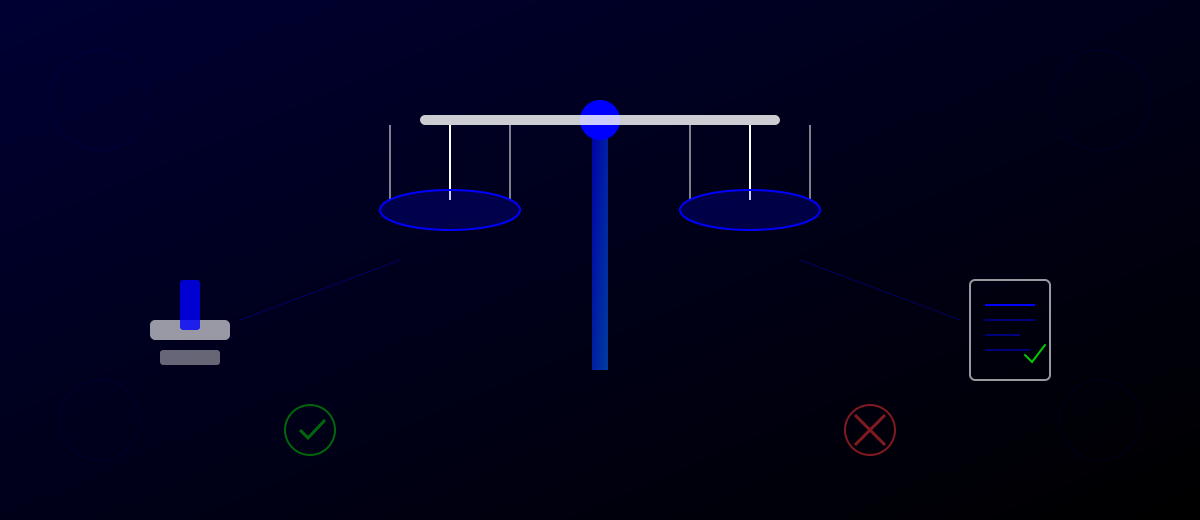
Traffic automation exists in a complex legal and ethical landscape. This guide helps you understand the considerations and make informed decisions about your automation activities.
Disclaimer: This article provides general information only and is not legal advice. Consult with a qualified attorney for specific legal questions.
Understanding the Legal Framework
Key Legal Concepts
| Concept | Description | Relevance |
|---|---|---|
| Terms of Service | Website usage contracts | Primary concern |
| CFAA (US) | Computer fraud law | Potential application |
| GDPR (EU) | Data protection | Data handling |
| Contractual law | Agreement enforcement | TOS violations |
Terms of Service
Most websites prohibit automated access in their Terms of Service. Violating TOS typically constitutes:
- Breach of contract
- Potential trespass to chattels
- Grounds for account termination
Important: TOS violation is primarily a civil matter, not criminal—but this doesn't mean it's without consequences.
Legitimate Use Cases
Traffic automation has many legitimate applications:
Authorized Use Cases
| Use Case | Legal Status | Notes |
|---|---|---|
| Own Website Testing | Legal | You control the site |
| Contracted SEO | Legal with auth | Client authorization |
| Market Research | Gray area | Depends on method |
| Competitive Analysis | Gray area | TOS dependent |
Testing Your Own Properties
Automating traffic to your own websites for testing, load analysis, or development is generally unrestricted.
Authorized Client Work
When working with clients who authorize automation on their properties:
| Requirement | Importance |
|---|---|
| Written authorization | Essential |
| Scope definition | Important |
| Documentation | Important |
Terms of Service Analysis
Common TOS Restrictions
Most major websites prohibit:
Typical Prohibition: "You may not use any automated device, program, robot, or similar means to access, acquire, copy, or monitor any portion of our website."
Restriction Categories
| Category | Description |
|---|---|
| Automated access | Bot traffic |
| Scraping | Data extraction |
| False identity | Fake accounts |
| System interference | Load attacks |
TOS Enforcement
| Enforcement Action | Likelihood | Impact |
|---|---|---|
| Account termination | High | Access loss |
| IP blocking | Medium | Need new proxy |
| Legal notice | Low | Warning |
| Lawsuit | Very Low | Significant |
Ethical Considerations
The Ethics Framework
Beyond legal requirements, consider ethical implications:
Questions to Ask
- Does this harm the website or its users?
- Am I misrepresenting my identity?
- Could this activity be considered fraudulent?
- Would I be comfortable if this were public?
Ethical Use Principles
| Principle | Application |
|---|---|
| No harm | Don't overload servers |
| Transparency | With your clients |
| No fraud | Don't click competitor ads |
| Consent | Own or authorized sites |
Ethical Baseline: If your automation provides value without causing harm, you're on solid ethical ground. If it's designed to deceive or damage, reconsider.
Risk Mitigation Strategies
Documentation Best Practices
Maintain records of:
| Document | Purpose |
|---|---|
| Client agreements | Authorization proof |
| Scope definitions | Activity limits |
| Compliance records | Due diligence |
Operational Guidelines
Safe Practices
- Rate limiting — Don't overwhelm servers
- Respectful behavior — Mimic human patterns
- Data minimization — Only collect what's needed
- Quick compliance — Respond to cease requests
Industry-Specific Considerations
SEO and Marketing
| Activity | Risk Level | Recommendation |
|---|---|---|
| Own site traffic | Low | Generally safe |
| Client site traffic | Low-Medium | Get authorization |
| Competitor research | Medium | Use caution |
| Ad clicking | High | Avoid |
E-Commerce
Warning: Automating purchases, ticket buying at scale, or inventory manipulation often violates laws beyond TOS, including consumer protection statutes.
Social Media
Social media automation faces particular scrutiny:
| Platform | Automation Stance |
|---|---|
| Strictly prohibited | |
| Twitter/X | Limited API allowed |
| Strictly prohibited | |
| Strictly prohibited |
Building a Compliant Practice
Compliance Checklist
Before Starting Any Campaign
- Identify website TOS requirements
- Obtain necessary authorizations
- Define activity scope and limits
- Plan for compliance responses
- Document everything
When to Seek Legal Counsel
Consider consulting an attorney when:
| Situation | Reason |
|---|---|
| Large-scale operations | Higher exposure |
| Client contracts | Liability allocation |
| Cease and desist received | Response strategy |
| Cross-border activity | Jurisdictional issues |
Conclusion
Traffic automation is a powerful technology with legitimate applications, but it requires thoughtful consideration of legal and ethical boundaries.
The safest approach:
- Focus on your own properties and authorized client work
- Document everything
- Respect website resources
- Consult professionals when in doubt
KeLAAX Stealth provides the technology—using it responsibly is your responsibility. When in doubt, err on the side of caution.
Final Thought: The most successful automation practitioners are those who build sustainable, ethical practices that create value without causing harm.